


 Staying sober in any location has its challenges but some people in recovery may find themselves wondering whether it’s wise to relocate to a state where marijuana is legal. Does the presence of legal marijuana mean they will be more tempted to use it? Does it increase their overall risk of relapse? Should they consider moving elsewhere instead?
These are all valid questions but before we jump into them, let’s review the current legality of recreational and medical marijuana in the U.S.
Where Is Medical and Recreational Marijuana Legal in America?
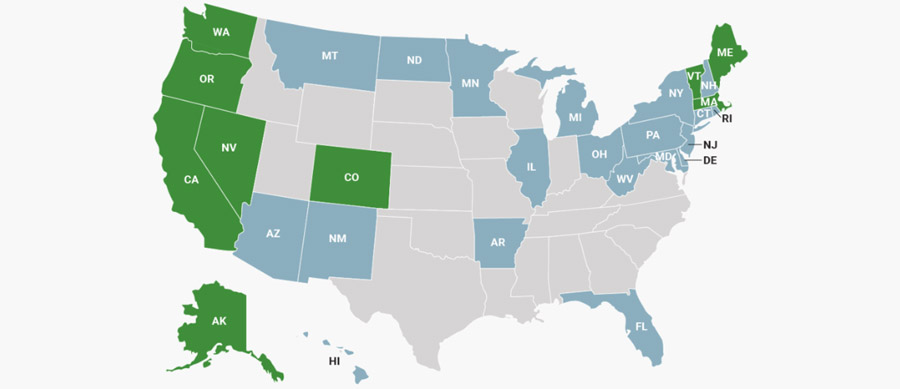
Marijuana has been legalized for recreational use in eight different states and D.C. as of May 2018.1 These states include:
- Alaska
- California
- Colorado
- Washington, D.C.
- Maine
- Massachusetts
- Nevada
- Oregon
- Washington
Medical marijuana has also been legalized in several other states and D.C., including:2
- Alaska
- Arizona
- Arkansas
- California
- Colorado
- Connecticut
- Delaware
- Florida
- Hawaii
- Illinois
- Maine
- Maryland
- Massachusetts
- Michigan
- Minnesota
- Montana
- Nevada
- New Hampshire
- New Jersey
- New Mexico
- New York
- North Dakota
- Ohio
- Oregon
- Pennsylvania
- Rhode Island
- Vermont
- Washington
- Washington, D.C.
- West Virginia
A few other states such as Alabama and Mississippi do maintain some laws permitting medical marijuana for certain conditions, but they do not currently have any laws broadly legalizing it.3
Sober Living in a State that Has Legalized Marijuana
When it comes down to it, staying sober in a state where the use of recreational and/or medical marijuana is legal is just like staying sober anywhere else. Just as alcohol is available in many bars, convenience stores, and restaurants everywhere around the country, the availability of legal marijuana won’t make or break your sobriety.
Long-term sobriety maintenance doesn’t necessarily have to do with the availability of drugs or alcohol. Instead, it comes down to a few important factors:
- Peer support
- Accountability
- Tools/life skills
- Safe, structured living environment
People who are struggling to maintain their sobriety after completing detox and rehab are most likely lacking some or all of the above factors. A person recovering from drug or alcohol addiction may also be going through a difficult or transitional time in their life and just need some extra support and accountability to stay sober.
Whatever the case may be, sober living homes and transitional housing programs are specifically designed to help people in recovery overcome the common obstacles of early sobriety such as cravings, high-risk social situations, chaotic home environments, and an overall lack of support from friends and family members.
If you are in recovery and you currently live in or are considering relocating to a state where marijuana is legal, you may want to disregard the legality of substances and focus more on your lifestyle and the factors you have put into place to safeguard your sobriety. If you find that you are struggling to maintain your sobriety on a daily basis, you may want to ask yourself a few important questions, like:
- “Does my current living situation make it difficult for me to stay sober?”
- “Are my friends and family supportive of my decision to abstain from drugs and alcohol?”
- “Do I tend to revert back to old habits when I’m faced with difficult emotions like stress, anxiety, depression, or anger?”
- “Am I attending 12-step support group meetings on a regular basis?”
- “Do I have someone who will keep me accountable to my sobriety?”
If you are consistently committed to the things that will bolster your sobriety, the state in which you live shouldn’t matter. Your sober lifestyle will endure, and you will gradually learn how to cope with triggers and temptations in a healthy way.
Eudaimonia Sober Living Homes in Colorado and Texas
Sober living homes (often referred to as halfway houses, ¾ houses, or transitional living homes) are located in states all over the country, but Eudaimonia Recovery Homes operates several high-quality and highly structured sober living houses in Colorado Springs, Houston, and Austin, Texas.
Eudaimonia sober living houses each provide structured, sober living in a safe and clean environment that promotes lasting sobriety. People in all stages of sobriety are encouraged to consider our transitional housing programs when seeking additional addiction recovery support.
Whether you’re looking for the “next step” after completing drug rehab or you’ve been out of rehab for a while but you’re facing a difficult stage in life, we offer several different levels of recovery support programs to best meet your current needs. And our sober living homes can provide stable, structured housing for you while you gradually establish a firm lifestyle of sobriety.
Regardless of whether you’re considering a Colorado sober living home or one in Texas, the staff at Eudaimonia Recovery Homes is here to help you find the perfect fit. Use our online booking system to browse and book available sober living homes or call (512) 363-5914 to speak with an admissions specialist today.
References:
- https://marijuana.procon.org/view.resource.php?resourceID=006868
- https://medicalmarijuana.procon.org/view.resource.php?resourceID=000881
- http://www.governing.com/gov-data/state-marijuana-laws-map-medical-recreational.html
Photo credit: http://www.businessinsider.com/legal-marijuana-states-2018-1


